













‘David’ Creators Answer all Your Questions About the Animated Hit Movie

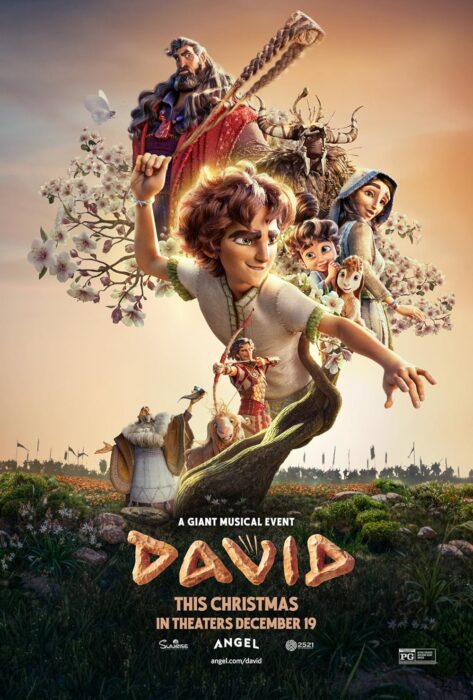
David is king of the box office—or, at least, prince.
Debuting at no. 2 behind Avatar: Fire and Ash, David, a feature-length animated musical produced by Sunrise Animation and distributed by Angel Studios, has earned over $50 million to date. Handily beating a new entry in the popular SpongeBob SquarePants franchise, it’s on track to break several box-office records.
Reviews from many mainstream and faith-based reviewers have been glowing, with The Gospel Coalition calling it, “biblically faithful and artistically rich” and film critic Zak Mellgren saying it “belongs in the conversation for the best animated Bible adaptation of all-time.”
But some reviewers have given criticism, such as a popular Christian YouTuber who said, “My kids actually got lost in the third act, and honestly so did I at times.” Others have raised questions about why the Amalekites look so scary or whether David’s mother should be so prominent. Was casting Phil Wickham a gimmick? (Oh, they did answer that already.)
That doesn’t even cover the questions about the legal wrangling over David.
Christian film critic Peter Chattaway, who closely follows biblical adaptations in media, called it “stunning” when Angel Studios announced that the lawsuit brought by Sunrise Animation, the South Africa team that produced David, was resolved following a $78 million deal.
In a series of interviews, the co-directors of David and a producer answer some of the biggest questions that Bible-reading, discerning audiences have about it. The interviews have been lightly edited for length and clarity.
Legacy and inspiration
In this animated musical, the role of David’s mother, Ntzevet, is elevated. Why?
Phil Cunningham, director: In Psalm 116, we read that David says, “I served you as my mother did”—talking about Nitzevet. And I was like, Wow, I can relate to that. My mother, who’s passed away now, was the most incredible, inspirational character.
We were three brothers and then a younger sister. When we were teenagers, she was telling us, “By your age, David was fighting Goliath, and what are you guys doing? Get out there, take on the world!” She was super inspirational and a huge part of our faith journey—as was my dad, but I think this story is one where mothers are championed and celebrated.
More often than not, mothers are stereotyped in movies as solely being protective. Yet if you look at David, Ruth was his great-grandmother, Nitzevet was his mother. These women had a huge impact on who David was, and I really wanted to shine a beautiful light on that. This is a movie for mothers around the world.
The film reflects what I learned from my mom. In a positive way, she would challenge and inspire us: You’re never too young. You can do it. And in her mind, God was always bigger than any problem. And I really wanted to bring that into the movie and show David wasn’t David by accident. He had an amazing mother behind him praying for him and inspiring him.
It reminds me of The Prince of Egypt, how the adopted and birth mothers of Moses were vital to it. Was that film an inspiration during the production of David?
Brent Dawes, screenwriter and co-director: The Prince of Egypt moved us all greatly. It was an incredible feat. It’s spectacular and, to me, a masterpiece. It inspired us because of its authenticity, the epic nature of it, and the way it treated its source material with such respect.
Phil: That film was always an inspiration because it was a faith-based movie that translated commercially. We wanted David to go broader, to be big enough and good enough to spill way past the faith audience. The scale of The Prince of Egypt was so good that you would go and watch it, which was our vision for David. But we drew inspiration from a lot of different movies.
Brent: The two movies that we talked about most in the early days were The Prince of Egypt and Tangled—not because they were musicals, but the tone and feel. We loved Tangled for its fun, playfulness, and sense of adventure. So, we felt animated David sits somewhere between those two and a little bit up.
We wanted to make David be what this movie needed to be, rather than derivative of something else. We focused on: What is the story? What are the themes? Where do the songs need to be? For that reason, I think it feels fresh and original.
The land where it happened
How did the film benefit from your team traveling to Israel, where these historic events happened?
Phil: We took five trips to Israel with different members of the team, which brought such authenticity to the David movie. As one example, we went to the Valley of Elah, led by a scholar named Dr. Douglas Petrovich who has expertise in biblical archaeology.
That valley has clear evidence that those were the hills the Philistines were on and the Israelites were at the city of two gates on the other side. So, you can see the line that David walked to Goliath, and Brent and I walked that exact line.
Where the river comes in, it oxbows away from where the Israelites would have been. David would have been way closer to the Philistines than his own army by the time he got to Goliath. Along the riverbank, the acoustics of it, it goes very quiet—you could hear the sound of doves.
As you’re watching the movie, David has that moment where the noise of the battle is gone, and he’s just there with God. And he prays, ‘This is how I’m going to do this—with God.’ Unless we had traveled to Israel and walked that line, the scene wouldn’t have been depicted that way.
Brent: When Phil first asked me to write the script, I didn’t allow myself to even think about it until I had been to Israel, read all the Psalms, and read the 42 chapters about David’s life in First and Second Samuel multiple times.
The brief to the tour guide in Israel was to take us to the places that David would have gone. He really targeted those locations which helped me tremendously as I wrote, because I had an osmosis of the land, which has such beauty and biodiversity.
I’ve never worked on a project before where I felt like, this isn’t mine. We collectively felt that we are custodians of this story, and we need to honor the Scripture, the land, the people, and everything as best we can.
People are surprised by the scope of David. How did a small team out of South Africa head up this ambitious production?
Rita Mbanga, producer: From art through to rendering, we had over 400 artists across 32 countries working remotely: Japan, Australia, the United States, Canada, South America, all across Europe and Africa. In a 24-hour window, we pretty much always had somebody working every hour because we spanned the globe—which was challenging and beautiful.
One of several roles that Phil’s wife, Jacqui, had was heading up the crew care team with TJ and Amy. They had their finger on the pulse of this army of people around the world. On Slack, she’d say, “This animator just had a baby. It’s her birthday. He’s on holiday today.” They knew what was happening with everybody and fostered a family culture.
We had a mix of emerging artists who never had a film credit before and highly experienced animators, where this was their 25th major film. Everyone we brought on in a leadership position had a big heart for mentorship, which raised the level of quality. It upscaled everybody on the team.
Phil: Our animation director, Dan Barker, worked on the Ice Age movies. He’s an incredible team leader with such an understanding of animation performance. On Zoom calls with animators, he’d drill into them: ‘It all comes down to the acting.’ All of the way David looks, his kindness, and the way Saul moves, it goes back to Dan and his team.
He was surrounded by some real veterans like Brian Menz and Bill Diaz, who worked on the Kung Fu Panda movies and several for Disney. Steve Pegram, one of our producers, was at Aardman Animation and DreamWorks including on The Prince of Egypt. Our cinematographer Dave Walvoord worked at DreamWorks for 20 years. Honestly, I could go on for hours.
The surprising finale
The third act of the film involves a battle with the Amalekites. How did you go about adapting the biblical accounts, including how they look?
Brent: The Amalekites were the hardest thing to solve because the story is mainly David versus Goliath or it’s Saul versus David, and then you’ve got this other foe coming in kind of at the end. That was really tricky and challenging. We tried a number of things—elevating them more, taking them away more. But we couldn’t do away with them, because it would have broken Scripture too much.
So early in the film, we seed it in: the Philistines are bad, and the Amalekites are worse. Further on, we’re linking Saul’s fear directly to the Amalekites. And there’s a lot of depth in terms of how they’re depicted and the research we did. Our production designer Lynton Levengood and our story team consulted with Rabbi Tuly Weisz, who pointed us to parts of the Jewish Scriptures that are not in the Christian Bible.
In those passages, the Amalekites are said to be shapeshifters who can even turn into animals. Now, we obviously didn’t do that, but Lynton then used that as inspiration for how they looked. When you see the antlers and animal skulls, it comes from a source many centuries old and it’s there for a reason.
There’s been some controversy, because it seems David’s mighty men defeat the enemy through song—which departs from a plain reading of 1 Samuel 30.
Brent: We really wanted to reflect what is the true message of David’s life, which is faith over fear. Whether the victory over fear is done through sword or song or whatever, we wanted to show the heart of it—that their part was having faith in God.
It’s a similar thing to Goliath. Some people say, David was a fighting man, he should have been like 19 or 20, not 14 years old. And my question to them would be, “Was it because David was a fighting man that he defeated Goliath?” Because the Bible tells us that God had the victory, and David had faith.
David and his men had the faith to be there and show up, but the victory is God’s. And who knows what happens off screen? We just showed them running down into a valley. Maybe a lot more happened, which is for the audience to decide. But we felt it was really in keeping with the message of the Bible in those chapters and themes that emerged as we were making the movie.
This film faced a year of legal wrangling, prior to the announcement on Oct. 8 that it would land in theaters this year. How do you think about it in retrospect?
Phil: Often, people say, God comes through in the eleventh hour. We discovered it can be more like Lazarus, where he comes through sometimes in the 13th or 14th hour. Lazarus was dead and buried before Jesus raised him. In many ways, the David film was in such a difficult position, not from the production, but getting it to market. It felt dead and buried. But God really just opened up the grave and pulled it back out in miraculous ways.
In that period, our production team was still finishing the movie. What is amazing is while we were making it, we had this real creative freedom. It’s quite unusual at that point in the process to craft it without a lot of interruption. I’d compare it to the story of Gideon and his 300 men, where God tells him to cut back, and cut back more. The whole reason he gives is that: so man will not get the glory, but God will get the glory. And that’s our prayer for this film.
David is currently playing in theaters worldwide.






Share your fantastical thoughts.