

















Discern the Top Three Negative Evangelical Myths about Popular Culture

For years, Christians have often spread many fun and often-folksy slogans about how to discern good and evil in our world.1 These memes often include phrases borrowed from Scripture, such as warnings against slander.
But not every “common sense” or “folk wisdom” slogan is actually biblical wisdom.
For example, many Christians roll their eyes when skeptics quote-toss two words from Matthew 7:1, “Judge not,” as if those words summarized all Jesus’s teaching.
Other slogans have unknown origins, such as “The Lord helps those who help themselves” or “Cleanliness is next to godliness.” You’ll hear these quoted in Little House on the Prairie books, but not Scripture. Like any meme that’s often caught and not taught, they arose from the mists of evangelical or religious subcultures Paul referred to similar slogans as “irreverent, silly myths” (1 Timothy 4:7).
Let’s survey a few of these meme-teachings that sound spiritual, but ultimately aren’t biblical. Nevertheless, they often haunt Christian parents who wrestle with challenges of wisely discerning popular culture in light of the gospel.

Personally, I can’t even enjoy brownies with mixed-in walnuts.
1. ‘You wouldn’t eat brownies with a little dog poop mixed in’
I don’t even recall when I first heard this meme!
On the surface, it sounds like simple common sense.
But let’s analyze its own, er, ingredients. What here counts as the “dog poop”?
We might answer by referring to a popular streaming TV show that portrays certain violent acts. The show is the brownie, and the violent acts are the mixed-in turd.
But by this reasoning alone, we’d need to admit the Bible itself would fail that test.
Of course, Christians know the Bible is not just a bucket of random ideas. We know God’s word discusses sex,2 violence, and even strong language—yet in specific contexts. Our Author never glamorizes the abuse of sex, violence, or language. With careful discernment, we understand why God includes those references.
Likewise, human culture is also more than buckets full of random Bad Things such as language, violence, or sex. Our stories and songs are much more like human beings. They’re complex. They hold mixed ideas and images, some good, some bad. Every human-made cultural work is like this because every human being is like this.
So should we compare every individual person to a poop-infested brownie?
Should we reject conversations with these humans because of their Bad Things?
Biblical Christian parents don’t reject their children for these reasons. Nor did Jesus reject other people this way. That’s because, despite the problem of sin, we respect people as bearers of God’s image. For the same reason, we can show respect to cultural works made by God’s image-bearers—even as, of course, we avoid stories and songs that wouldn’t be healthy for our children’s digestion.

2. ‘You don’t need to swim in the sewer to know what’s in it’
Here’s another meme I used to hear a lot. Apparently our well-meaning Christian ancestors seem to have enjoyed drawing their popular-culture metaphors out of the toilet. But it’s just as flawed as the brownies-with-poop folk wisdom.
This meme implies we can stay “clean” (and perhaps even holy) with this one weird trick—avoiding nasty culture. Biblically this doesn’t work. Yes, the world is teeming with ugly sewage. But where did the world get it? Plot twist: the sinful sludge pours out from evil human hearts. Without correcting the source of sin, we’re blaming “the world” for simply acting as a reservoir for all of our spilled-over idolatries.
Like the brownie meme, this slogan slanders popular culture. It implies human stories could never reflect biblical virtues, much less concepts of grace and truth. And it ignores the call that Jesus gives many Christians to go therefore and make disciples in all nations—even to many regions that literally lack indoor plumbing.

Disclaimer: not actual money. This is merely a photography of money, for illustrative purposes only. No counterfeit intended. Not legal tender in your jurisdiction.
3. ‘Government agents learn to recognize counterfeit bills not by studying counterfeits, but by studying real currency’
Here’s an oldie but goodie, the kind shared by a rural pastor, 1990s email forward, or random magazine article! It’s meant to warn against excessive interest in “bad stuff” and refocus Christians only on praiseworthy things (Philippians 4:8).
One might challenge this meme first by asking whether that’s actually standing policy at the U.S. Department of the Treasury. Moreover, as we move further into cashless economies, this meme is likely due for a natural death. But the general analogy could easily be updated for the 2020s era:
Social media users learn to recognize AI-generated slop not by constantly studying AI-generated slop, but by studying real photos and illustrations made by humans.
Either way, this meme implies that non-Christian popular culture is counterfeit culture, while only Christian-made content counts as The Real Thing. Therefore, if all non-Christian popular culture is a counterfeit, we have no need of it. We should stick only with Christian cultures that (we assume) only reflect true values.
But in fact sin lurks in every cultural work, no matter who made it.
And our Author has left hints of His truth in all of nature (Romans 1) and every cultural work (see especially Acts 17, when the apostle Paul quotes Greek poetry about Zeus and “appropriates” this accidental truth to illustrate the true God).
The folk saying also bypasses the fact that our true standard of God’s word does challenge us to compare truth with the world’s counterfeits. For example, Psalm 34:8 prompts us to “Taste and see that the Lord is good,” while Isaiah 44 compares God with people’s idolatrous worship of wooden blocks.
Many faithful saints across Church history learned to love the Gospel precisely because they welcomed this good news as a direct contrast to the lies they knew.
Disregard meme-teaching, acquire biblical discernment
These pithy phrases sound spiritual and seem to prioritize holiness. But so did the original “spiritual” memes spread by the false teachers of the New Testament. These build moralistic barriers around God’s actual Law. They levy impossible burdens on people. Worst of all, they distract from the fulfillment and purpose of God’s true Law in Jesus Christ, the only One who can cure the sewage in our hearts.
As we keep wrestling with pop-culture discernment, these meme-teachings will likely change form even as they offer us the same fake spirituality. But we get no such shortcuts to holiness. Always discern everything by Scripture’s light, whether it’s that new YA fantasy or the “discernment” meme you scroll past on social media.
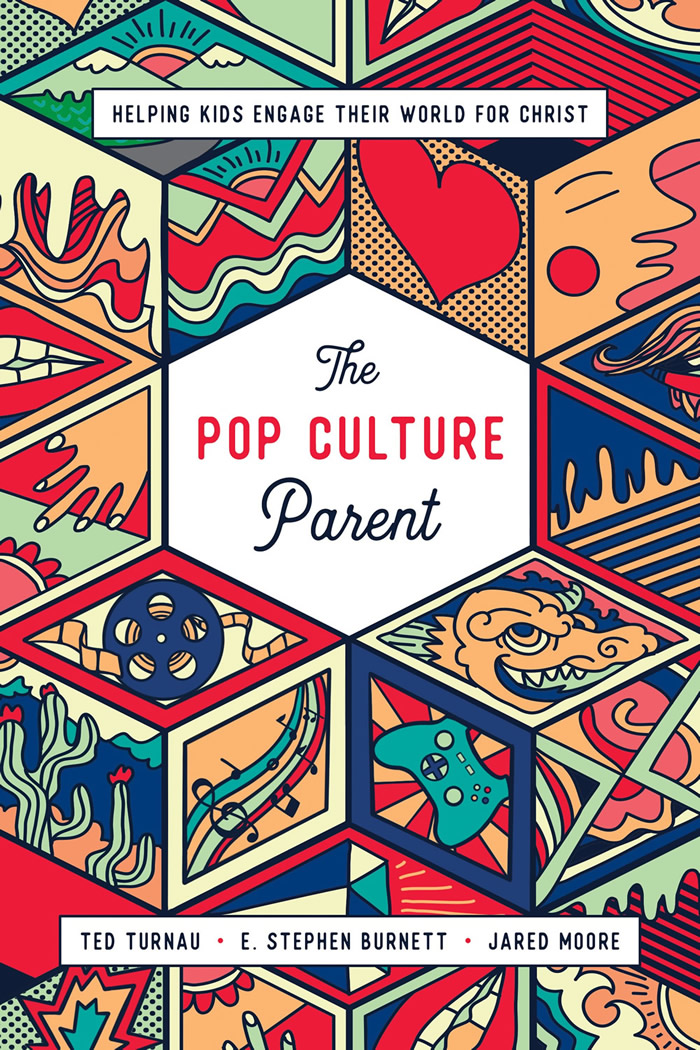
Parents often feel at a loss with popular culture and how it fits in with their families. They want to love their children well, but it can be overwhelming to navigate the murky waters of television, movies, games, and more that their kids are exposed to every day.
Popular culture doesn’t have to be a burden. The Pop Culture Parent equips mothers, fathers, and guardians to build relationships with their children by entering into their popular culture–informed worlds, understanding them biblically, and passing on wisdom.
This resource by authors Jared Moore, E. Stephen Burnett, and Ted Turnau provides Scripture-based, practical help for parents to enjoy the messy gift of popular culture with their kids.
Order The Pop Culture Parent from:
- This article is adapted from “deleted scenes” of my nonfiction book The Pop Culture Parent: Helping Kids Engage Their World for Christ, with Ted Turnau and Dr. Jared Moore. ↩
- Some years ago, some evangelicals who advocated “engaging culture” sought to justify film nudity by referencing the Bible’s portrayals of nudity. This is a drastic category confusion. Scripture is a written text that describes nudity on occasion, usually in the context of the marital covenant or else sinful shame. By contrast, filmmakers who include nudity are literally paying human beings to disrobe in public. ↩










Great article! I’ve only heard most of these memes in passing, but always thought them a little odd. And yes, your explanations illustrate why. So often, catchy slogans try to simplify and codify something that either requires more nuance or isn’t true at all. But they sound good! Lol. Thanks for sharing!