













‘Stranger Things’ Season Five Gives Weight to Parents’ Fears

Nearly ten years after the haunting and heartfelt premiere of Stranger Things, the first half of the fifth and final season has aired on Netflix, shattering streaming records after its Thanksgiving release. Does it hold up to the original, and what themes does it carry? Discerning viewers might find a surprising contradiction.
Stranger Things has been inconsistent to say the least. From the beginning we fell in love with the tight pacing, midwestern setting, and believable characters. Season Two carried this on perfectly. Season Three was an utter mess, promoting teen sex, flattening characters, and positing a town-sized Russian base beneath a shopping mall. While Season Four had a smarter script, too many new characters ruined tension with a glut of separate storylines.
Sadly, Season Five offers little hope for the conclusion. Characters are once again flattened into stereotypes. Hopper is a bumbling ape. Nancy is a feminist who’s always right. Robin is a motormouthed preacher of homosexual “empowerment.” A few of the old gang remain likeable and Mike even begins to show signs of capable leadership. But when the climax of the half-season depends on one character’s ability to “embrace himself,” today’s audiences can only roll their eyes. It doesn’t help that our youngest heroes, supposedly sophomores in high school, are all clearly in their twenties.
Season Five’s most interesting aspect might be its most glaring contradiction.
In Season Four, Hawkins is thrown into an uproar when a series of Upside-Down-related murders is pegged on the local Dungeons and Dragons guild. The series makes clear parallels with the real-world Satanic Panic, where 1980s parents feared D&D clubs were recruitment tools for satanic cults. These adults worried that their children were becoming so engaged in the game that they were losing ties to reality, thinking themselves elves and wizards instead of sixth graders. Children are vulnerable, the argument went, and when they aren’t taught to separate fantasy from reality, they can wander into dangerous delusion, trusting predators over parents.
Season Four treated this suspicion with ridicule and caricature. One villainous teen quoted the book of Romans at a town hall meeting to rile up a slavering mob. Soon, pickup beds full of redneck vigilantes and knuckle-dragging teen jocks hunted D&D nerds through the streets of Hawkins. It’s true that in the real world, there were no documented cases of kids being lured into Satanic cults through D&D. But neither were there occurrences of moms strapping on shotguns to hunt down DMs.
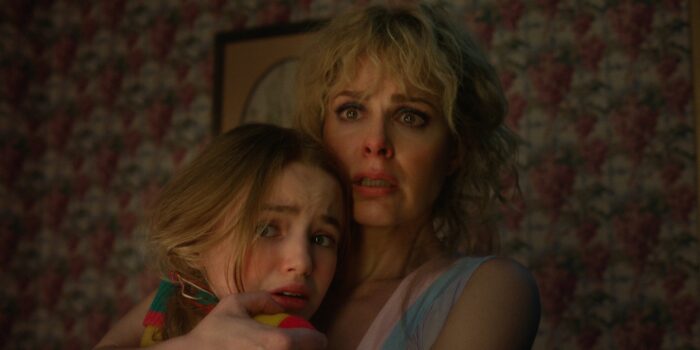
Season Five reinstates this suspicion, almost apologetically. Vecna is back, and now he’s using his psychic abilities to pose as an invisible, imaginary friend called “Mr. Whatsit,” a reference to Madeline L’Engle’s A Wrinkle in Time. He then lures them into a mental fantasy world, all while using their bodies for his nefarious purpose. In one scene, he even explains that children are the “perfect vessels.”
To the fantastical Christian reader, this idea resembles nothing so closely as the 1986 classic This Present Darkness. Frank Peretti’s groundbreaking novel features demons, with the help of pop-psychologist school administrators, posing as imaginary friends to school children, leading them down deceptive and destructive pathways. Indeed, Vecna’s closing monologue almost gives weight to evangelical concerns as he explains why he targets vulnerable children.
It’s a surprising message from the showrunners, made all the more terrifying by the real-world enemies, both human and demonic, that target children today. The 1980s are long over, and Christian parents are now often scolded into lowering their defenses. Limited online exposure for kids is ridiculed as paranoid fundamentalism, alongside scrutinizing teachers, or committing the greatest taboo: homeschooling.
Stranger Things almost seems to warn parents in the other direction: Be active. Communicate with your kids. Don’t check out. Ham-fisted as the writing is, perhaps there is a thematic through line. Rather than falling down conspiracy holes (Season Four) or checking out (Season Five), parents can foster environments of honesty and involvement, something seriously lacking in Hawkins, Indiana.
Discern: Pro-homosexual messaging, PG-13 language, and PG-13 violence.








Share your fantastical thoughts.